
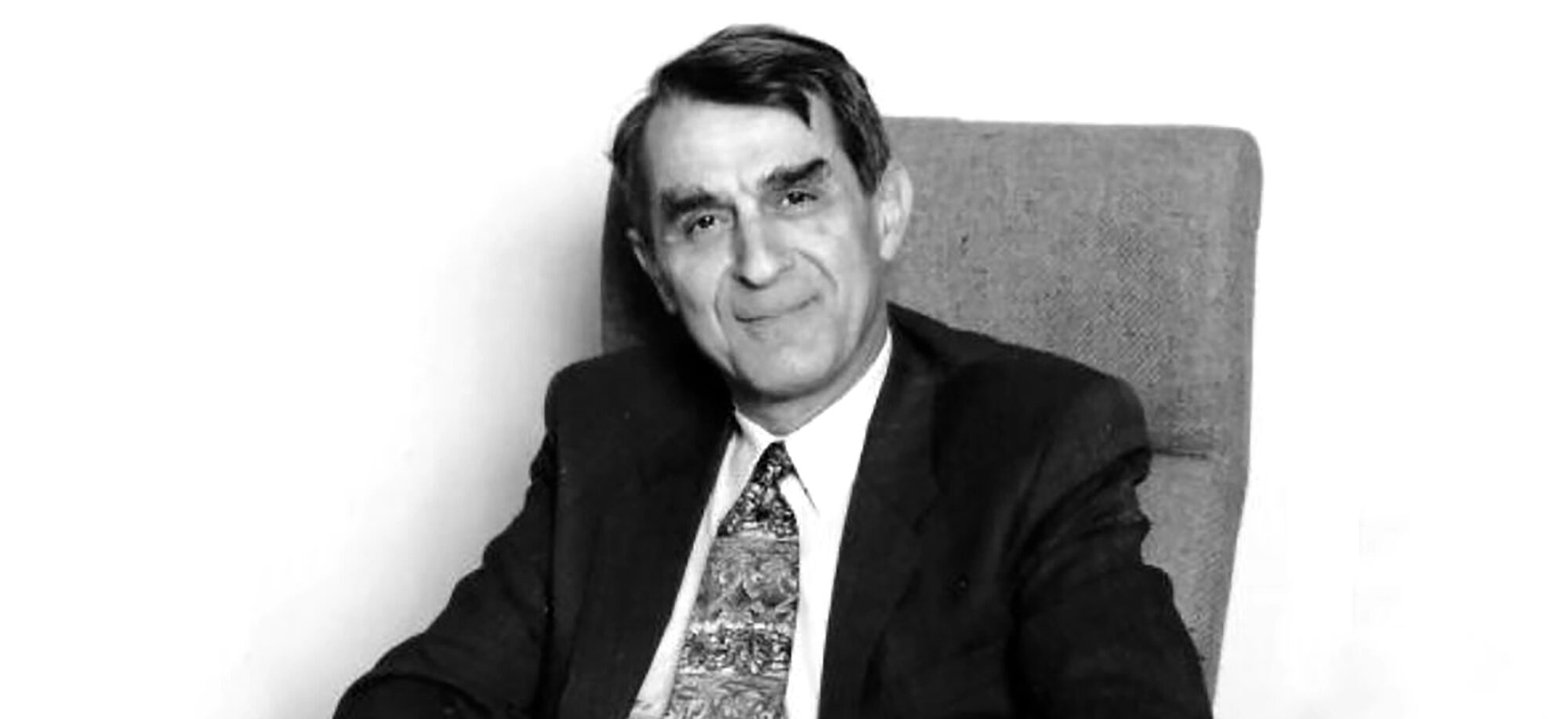
The late 1980s and ’90s were years of intense change and urgent action in the Armenian world. The map of Armenian concerns dramatically expanded during this time, while our dispersed communities around the world became more tightly woven together.
The Diocesan Center in New York City was a focal point for these historic developments—and for anyone involved in Armenian affairs at the Diocese, the name of Dr. Marzbed Margossian will instantly summon vivid recollections of that period, its influential figures, and its remarkable accomplishments.
Dr. Margossian was one of the people who foresaw the potential of this time, and acted to realize that potential to its fullest. He worked alongside the Diocesan Primates of the day—first Archbishop Torkom Manoogian, and later Archbishop Khajag Barsamian—to help guide the Armenian community into a new era that held great promise, but also required vigilance to avoid new hazards.
In the late Soviet period, prior to Armenia’s independence, Marzbed was among those who saw the thawing of Cold War tensions as a golden opportunity to bring Armenian intellectuals from the homeland and the West closer together. To that end, he led the effort to bring celebrated Armenian writers, artists, and academics to the United States—among them Armenia’s great poet Silva Gaboudikyan.
Marzbed was himself a man of letters, who had spent the prior decade publishing English translations of some of the great works of Armenian poetry, often in collaboration with the renowned Diana Der Hovanessian. These volumes included The Anthology of Armenian Poetry, published by Columbia University Press; Sacred Wrath: Selected Poems of Vahan Tekeyan, published by Ashod Press (the pioneering publishing imprint of the late, great Jack Antreassian); and a brilliant translation of the poetry of “Shen Mah”—the pen name of the late Patriarch Torkom Manoogian.
Through such projects, Marzbed became associated with the soaring creative spirits of the time, who shared his drive to bring the treasures of Armenian culture to a universal audience.
A different side of Dr. Margossian’s activism emerged when the Karabagh crisis arose. Archbishop Manoogian tapped Marzbed to lead the Diocesan Karabagh Committee, which was a pioneer in organizing public demonstrations of the Armenian community, showing our outrage over the pogroms in Sumgait, Baku, and Kirovabad—and showing solidarity with the embattled fellow Armenians affected by the crisis. The advent of Armenia’s independence, and the critical early years of the new republic, only deepened Marzbed’s connection to the new realities of the Armenian world.
Throughout this period, Dr. Margossian was a daily presence at the Diocesan Center, taking time from his professional career at Albert Einstein Medical College to meet with the Diocese’s executive director Syraun Palvetzian, with whom he shared an abiding friendship. He was a valued counsellor to both Archbishop Manoogian and Archbishop Barsamian, and served a key role in ensuring a smooth and efficient transition between the outgoing and incoming Diocese Primates, at a delicate moment for our church, homeland, and people.
Less visibly, perhaps—but no less important to his character—Marzbed would be at St. Vartan Cathedral every Sunday, attending badarak, and worshipping before the holy altar.
After years as an influential political, cultural, and social force in our Diocese, Marzbed Margossian departed for California in 1997. There he went on to a sterling career as an educator and administrator of Armenian schools, where he shared his passion for the greatness of our heritage with a new generation, while continuing to be an important voice in Armenian political and intellectual circles.
Dr. Margossian passed away on November 12, 2022, in Los Angeles, CA, where he was mourned in the Armenian intellectual and activist circles of the West Coast. But even 30 years after his departure from the East Coast, Marzbed Margossian’s influence is still felt, in large and small ways, throughout the Armenian community of New York. That influence is honored and valued, and remembered with great fondness, by Marzbed’s many friends, collaborators, and admirers across the Eastern Diocese.
He is survived by his wife Seta, children Dr. Khatcher, Areni, and Marzbed, and the members of the Margossian, Babahekian, Hedeshian, Boulghourjian, Simitian, Der Kalousdian, Abboud, and Doumanian families. On behalf of the Eastern Diocese, we pray for the Lord to bring consolation to them, and to grant eternal rest to our dear and valued friend, Marzbed Margossian.
—C. H. Zakian