
In Stockholm, Sweden, church leaders and advocates from around the world gathered last week to mark the centennial of a formative event in the modern ecumenical movement.
The Christian Council of Sweden hosted the weeklong celebration, meeting August 18-24. Thousands of participants, including global and national church leaders, took part in the events that included informative seminars, prayer services, and cultural activities, all under the theme “Time for God’s Peace.”
Among the leaders of the Protestant, Roman Catholic, and Orthodox churches attending were Ecumenical Patriarch Bartholomew of Constantinople; Patriarch Mor Ignatius Aphrem II of Antioch; Anglican Archbishop of York (UK) Stephen Cottrell; and WCC general secretary Rev. Dr. Jerry Pillay. Pope Leo XIV of the Roman Catholic Church addressed the conference in a live video message.
With the blessing of His Holiness Karekin II, the Supreme Patriarch and Catholicos of All Armenians, the Mother See of Holy Etchmiadzin was represented at the conference by Archbishop Nathan Hovhannisyan, of the Mother See’s Department of External Relations, and Fr. Karekin Hambardzumyan, of its Inter-Church Relations department.
A Foundational Event
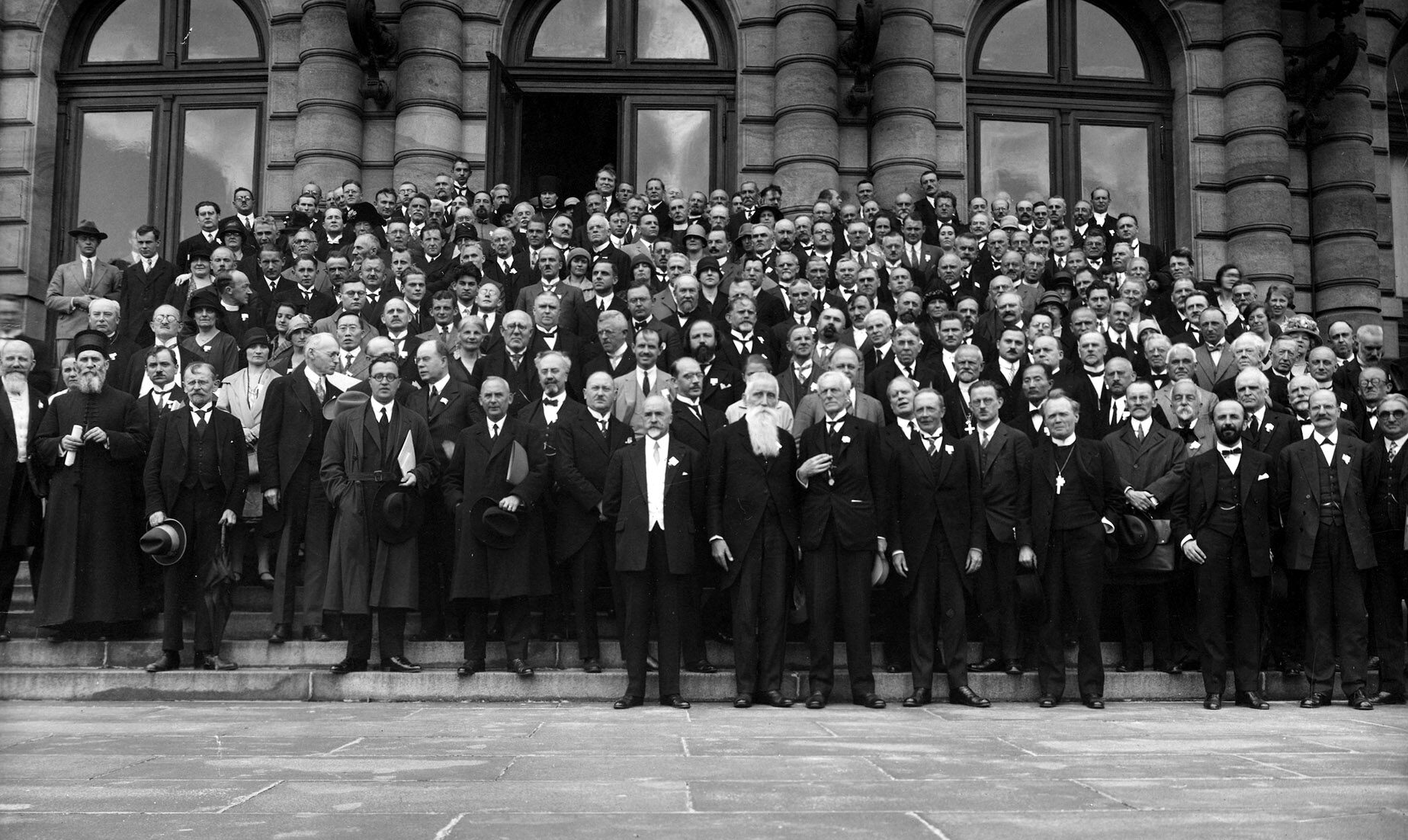
Central to last week’s gathering was the recollection of a critical event from a century ago, which also took place in the city of Stockholm: the “Universal Christian Conference on Life and Work” (pictured here). It brought together more than 600 church leaders from 37 countries in the aftermath of World War I.
The Stockholm Conference of 1925 is now seen as a foundational event in the modern global ecumenical movement. Its initiator, Archbishop Nathan Söderblom (1866-1931), leader of the Church of Sweden at the time, was awarded the Nobel Peace Prize for his efforts. One of the results of the gathering was the creation of the World Council of Churches in 1948.
The Armenian Church in 1925, having lately endured the most tragic and disruptive decade in its history, was in no position to send representatives to Stockholm. However, beginning in the 1950s Armenian dioceses of the diaspora began to take up formal membership in national ecumenical groups; the pioneer was the Eastern Diocese of America, which joined the U.S.-based National Council of Churches in 1957.
Within a few years, the Mother See of Holy Etchmiadzin would join the World Council of Churches, during the WCC’s 1962 Third Assembly, held in New Delhi, India.
Since that time, Armenian churchmen have played prominent and influential roles in the organization, including Catholicos Karekin I (of blessed memory), and Catholicos Aram I of Cilicia. Currently, Archbishop Vicken Aykazian, the Legate and Ecumenical Director of the Eastern Diocese, serves in the high-ranking role of Vice Moderator of the WCC’s Central Committee.
Read more on the website of the World Council of Churches.
Scroll down to read about the recent conference in Armenian.
* * *
Էկումենիկ Շաբաթ
Օգոստոսի 18-24-ը Շվեդիայի մայրաքաղաք Ստոկհոլմում տեղի ունեցավ «Աստծո խաղաղության ժամանակն է» խորագրով էկումենիկ շաբաթը` նվիրված 1925 թ․ Ստոկհոլմի Էկումենիկ համաժողովի 100-ամյակին։ Միջոցառումը կազմակերպել էր Շվեդիայի եկեղեցիների խորհուրդը։
Էկումենիկ շաբաթվա ծրագրում ներառված էին գիտական ու աստվածաբանական միջոցառումներ և քննարկումներ՝ նվիրված խաղաղության, արդարության և քրիստոնեական միասնության հրամայական խնդիրներին։
Միջոցառմանը մասնակցում էին տարբեր եկեղեցիների առաջնորդներ, հոգևորականներ, միջեկեղեցական գործիչներ, աստվածաբաններ և կրոնագետներ աշխարհի բազմաթիվ երկրներից։
Ն.Ս.Օ.Տ.Տ. Գարեգին Երկրորդ Ծայրագույն Պատրիարք և Ամենայն Հայոց Կաթողիկոսի օրհնությամբ Մայր Աթոռ Սուրբ Էջմիածինը ներկայացնում էին Մայր Աթոռի Արտաքին հարաբերությունների և արարողակարգի բաժնի տնօրեն Գերաշնորհ Տ. Նաթան արքեպիսկոպոս Հովհաննիսյանը և Մայր Աթոռի Միջեկեղեցական հարաբերությունների բաժնի տնօրեն Հոգեշնորհ Տ. Գարեգին վարդապետ Համբարձումյանը։