
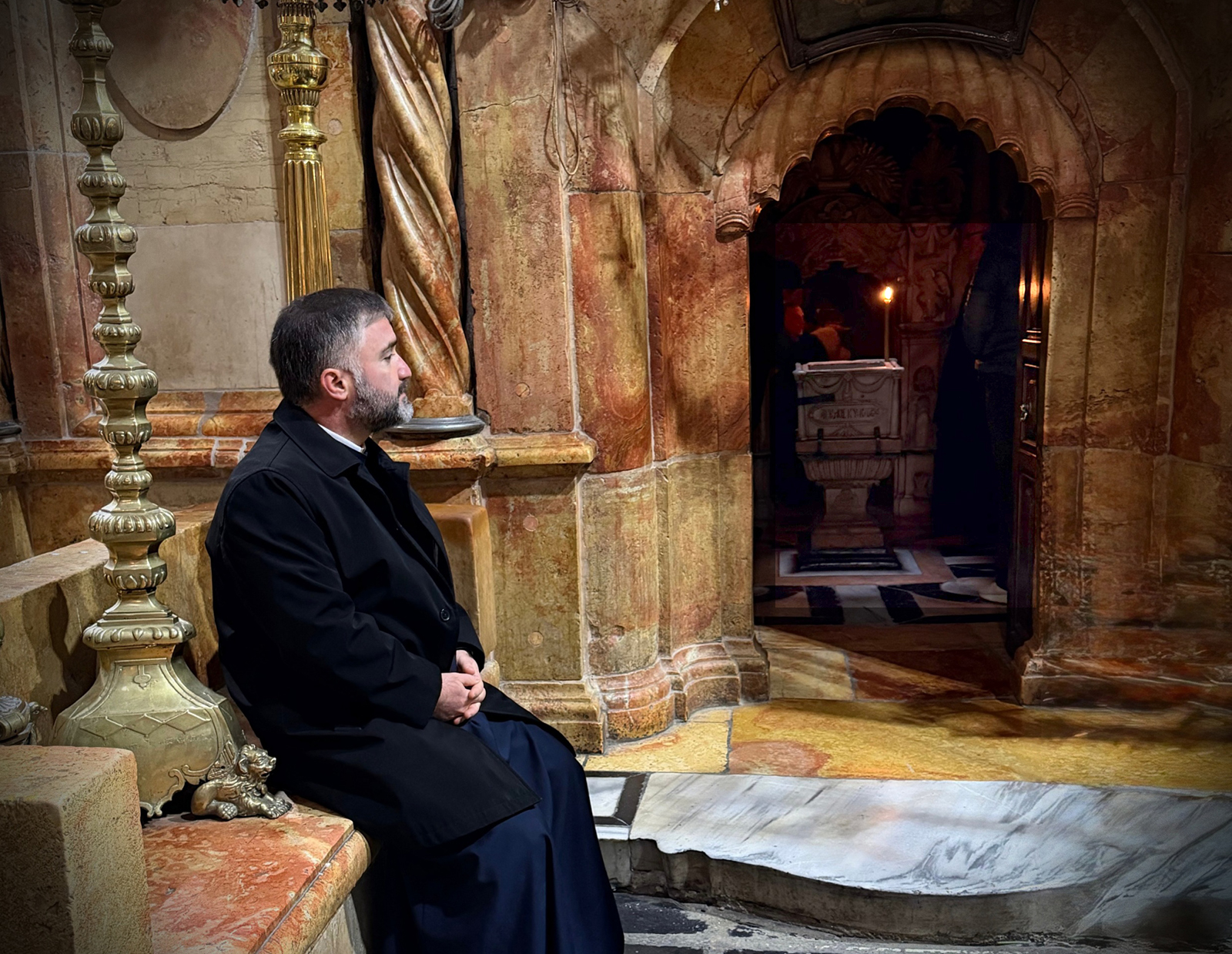
In his Easter message, Diocesan Primate Bishop Mesrop Parsamyan reflects on the quiet power of faith that endures in the face of uncertainty—and the hope revealed through Christ’s Resurrection.
* * *
The Easter Message of Bishop Mesrop Parsamyan
Primate of the Eastern Diocese of the Armenian Church of America
Opposite the Tomb
“As evening approached, there came a rich man from Arimathea, Joseph, who had himself become a disciple of Jesus. Going to Pilate, he asked for Jesus’ body, and Pilate ordered that it be given to him. So Joseph took the body, wrapped it in a clean linen cloth, and laid it in his own new tomb that he had cut out of the rock. He rolled a great stone in front of the entrance to the sepulcher before departing. And Mary Magdalene and the other Mary were sitting there, opposite the tomb.” (Matthew 27:57-61)
The Gospel stories of Christ’s crucifixion, burial, and resurrection are so dramatic, so vivid, that there is always something new to discover in them. Even small details given by the Evangelists can hold the deepest meaning for us, as we re-live those world-changing events during Holy Week and Easter.
One such detail comes at the end of the burial of Jesus. After we learn how our Lord’s lifeless body was taken with care, and laid in the sepulcher, the Scriptures tell us that “Mary Magdalene and the other Mary were sitting there, opposite the tomb” (Mt 27:61). It’s the kind of small detail one can easily overlook; but it took on a special meaning for me years ago, when I was serving as a parish pastor.
At that time, one of my parishioners was a widow, who would faithfully visit her beloved husband’s grave at the cemetery. She would bring a small chair with her, and sit by the headstone for hours. It was my privilege to accompany her on occasion, whenever she asked me to offer formal blessings at his burial site. But in my youth, I struggled to understand why she would remain there, just sitting, for so long afterwards.
Over time, however, I came to realize what kept her there. Not habit nor loneliness, but Love. Love that refused to walk away. Love that chose to stay present, close at hand—even when the only response to that presence was silence.
That same love appears in the Gospel, when we are shown Mary Magdalene and Mary the mother of Jesus sitting opposite the tomb of our Lord.
In front of them was a massive stone, a dark silence, a place that appeared to hold only loss. Everything they loved seemed closed off behind that stone. They could have turned away and departed, like everyone else. But they chose to stay, facing the sealed grave—out of Love.
Earlier this year, on a pilgrimage to Jerusalem, I too sat where they sat, opposite the Holy Sepulcher: the Tomb of Christ. I will never forget the stillness of that place. The quiet. The weight of history. And I thought about those women: the ones in the Gospel, and the one in my early ministry.
Many of us have been to this place symbolically in our own lives. We believe; we pray; we trust in God. Yet we feel we are staring at something closed. A relationship that seems over. A prayer that seems unanswered. A future that looks blocked. We are doing all we know to do—and still, the stone is there.
But like the women at the tomb, we stay. Sometimes that is exactly what faith asks of us: to stay in place. To stay near God, even when you don’t understand. To stay in prayer, even when you don’t yet see results. To stay hopeful, even when everything in front of you says, “It’s over.”
The women stayed—and because they stayed, they were among the first to witness God’s victory: the fulfillment of Christ’s promise that “I am the Resurrection and the Life.” They learned that waiting with God is never wasted time. Love that remains near God is always rewarded.
My friends, if you are facing a stone in your life today, do not lose heart. Do not turn away—but stay. Stay in prayer. Stay in trust. Stay close to God, even when you cannot see the outcome. Jesus showed us that Resurrection follows faithful waiting. Light follows the long night. Life has the final word.
Jesus Christ is truly risen. And because He lives, every stone that stands before you is temporary. But God’s promise is eternal.
May that promise be alive in our hearts this Easter, as we proclaim:
Christ is raised from the dead! Blessed is the Resurrection of Christ!
Krisdos haryav ee merelotz! Orhnyal eh haroutiunun Krisdosi!
Prayerfully,
Bishop Mesrop Parsamyan
Primate
Easter 2026
Above: Seated before the Church of the Holy Sepulcher in Jerusalem during the Diocese’s Holy Land Pilgrimage last January, Bishop Mesrop sits in the place outside Christ’s tomb once occupied by Mary the Mother of Jesus and Mary Magdalene.
* * *
Հայց. Եկեղեցւոյ Ամերիկայի Արեւելեան Թեմի Առաջնորդ
Տ. ՄԵՍՐՈՊ ԵՊԻՍԿՈՊՈՍ ՊԱՐՍԱՄԵԱՆԻ Ս․ Զատկական ՊԱՏԳԱՄԸ
Հակառակ կողմը Գերեզմանին
Տարիներ առաջ, երբ ես որպէս ծխատէր հոգեւոր հովիւ կը ծառայէի, ծխականներէս մէկը, դժբախտութիւնը ունեցաւ կորսնցնելու իր ամուսինը։ Անոր մահուընէն ետք, այս այրին հաւատարմօրէն կ՛այցելէր իր ամուսնոյն գերեզմանը։ Փոքր աթոռ մը կը բերէր հետը եւ ժամերով կը նստէր ամուսնոյն գերեզմանաքարին գլուխը։ Տարբեր առիթներով ընկերանալով իրեն ու երբ հարցնէր, աղօթք մը կ՛արտասանէի գերեզմանին վրայ։ Բայց երիտասարդ տարիքիս, կը ջանայի հասկնալ թէ ինչու՞ այս այրի կինը ժամերով հոն առանձինը կը նստէր։
Ժամանակ մը ետք հասկցայ, թէ ի՛նչն էր, որ զինք երկար կը պահէր գերեզմանաքարին մօտ։ Ո՛չ սովորութիւնն էր եւ ո՛չ ալ առանձնութիւնը, այլ՝ սէրը։ Այդ սէրը, որ կը մերժէր հեռանալ իրմէ։ Սէր մը որ կ՛ուզէր մնալ ներկային մէջ, իր մօտը, նոյնիսկ երբ միակ պատասխանը, որ կը ստանար՝ լռութիւնն էր։
Ահա, այդ նո՛յն սէրն է, որ կը յայտնուի Աւետարանին մէջ։ Սուրբ Գիրքը կ՛ըսէ մեզ, թէ Տէր Յիսուսի թաղումէն ետք. «Մարիամ Մագտաղէնացին ու միւս Մարիամը այնտեղ կը նստէին, հակառակ կողմը գերեզմանին»։ (Մատթ. 27:61)
Անոնց առջեւ հսկայ քար մըն էր, մութ լռութիւն մը, այնպէս կ՛երեւար, որ միայն կորուստի տեղ մ՛ըլլար։ Այն ամէնը, որ կը սիրէին, կարծէք արգելափակուած էին այդ քարին ետեւը։ Անոնք կրնային մեկնիլ, բայց իրենց սէրէն մղուած նախընտրեցին մնալ, դիտելով կնքուած գերեզմանը։
Մի քանի ամիսներ առաջ երբ Երուսաղէմ ուխտագնացութեան գացինք, ես եւս նստեցայ այն տեղը ուր իրենք նստեցան – հակառակ կողմը Քրիստոսի Գերեզմանին։ Երբէ՛ք պիտի չի մոռնամ անշարժ ու անդորր վիճակը այդ տեղին։ Զգալի էր ծանրութիւնը պատմութեան։ Ու մտածեցի այդ կանանց մասին – Աւետարանին կանանց ու նաեւ այն այրի կնոջ, որ ծուխիս մէջն էր։
Շատերս խորհրդանշականօրէն եղած ենք այս տեղը մեր անձնական կեանքին մէջ։ Մենք կը հաւատանք, կ՛աղօթենք, կը վստահինք Աստուծոյ։ Բայց միաժամանակ մենք կը խորհինք, որ մեր աչքերը սեւեռած ենք փակուած բանի մը։ Կարծէք յարաբերութեանց մը, որ վերջ գտած է։ Կարծէք աղօթք մը, որ անպատասխան մնացած է։ Ապագայ մը, որ արգելափակուած է։ Մենք մեր կարելին է, որ կ՛ընենք մեր գիտցածին համաձայն – բայց տակաւին քարը անշարժ այնտեղ է։
Բայց գերեզմանին մօտ կանանց նման, մենք կը մնանք ու կը սպասենք։ Երբեմն մեր հաւատքը այդ կը պահանջէ մեզմէ, կենալ եւ սպասել։ Կանգնիլ Աստուծոյ մօտ, նոյնիսկ երբ չես հասկնար։ Մնալ աղօթքի մէջ, նոյնիսկ երբ որեւէ արդիւնք չես տեսնէր։ Մնալ յոյսով լի, երբ ամէն ինչ շուրջդ կ՛ազդարարեն թէ, «ամէն բան վերջացած է»։
Կանայք մնացին – եւ քանի որ սպասեցին, անոնք առաջին ականատեսները եղան Աստուծոյ յաղթանակին, Քրիստոսի խոստումի իրականացմանը թէ. «Ես եմ Յարութիւնն ու կեանքը»։ Անոնք հասկցան որ Աստուծոյ քով սպասելը երբէ՛ք ժամանակի կորուստ մը չէ։ Այն սէրը, որ կը մնայ Աստուծոյ մօտ, մի՛շտ կը վարձատրուի։
Սիրելիներ, եթէ դուք այսօր դէմ հանդիման կը գտնուիք «քարի» մը, մի՛ յուսահատիք։ Մի յուսախաբուիք եւ հեռանաք անկէ, բայց մնացէք հաստատ, աղօթքով ու վստահելով։ Մնացէք Աստուծոյ մօտ, նոյնիսկ երբ արդիւնքը չէք տեսնէր։ Յիսուս մեզ ցոյց տուաւ, որ Յարութիւնը կը հետեւի հաւատարմօրէն սպասումին։ Լոյսը կը հետեւի երկար գիշերին։ Կեանքն է, որ կ՛ունենայ իր վերջին խօսքը։
Յիսուս Քրիստոս ճշմարտապէս յարեաւ։ Քանի որ Ան կ՛ապրի, իւրաքանչիւր քար, որ ձեր առջեւ կը կանգնի ժամանակաւոր է։ Աստուծոյ խոստումը յաւիտենական է։
Թող այդ խոստումը կենդանի մնայ մեր սրտերուն մէջ այս Զատկի տօնին երբ մենք պիտի հռչակենք թէ՝
Քրիստոս յարեաւ ի մեռելոց։ Օրհնեալ է Յարութիւնն Քրիստոսի։
Աղօթիւք եւ օրհնութեամբ՝
Մեսրոպ Եպիսկոպոս Պարսամեան
Առաջնորդ
Ս․ Զատիկ 2026